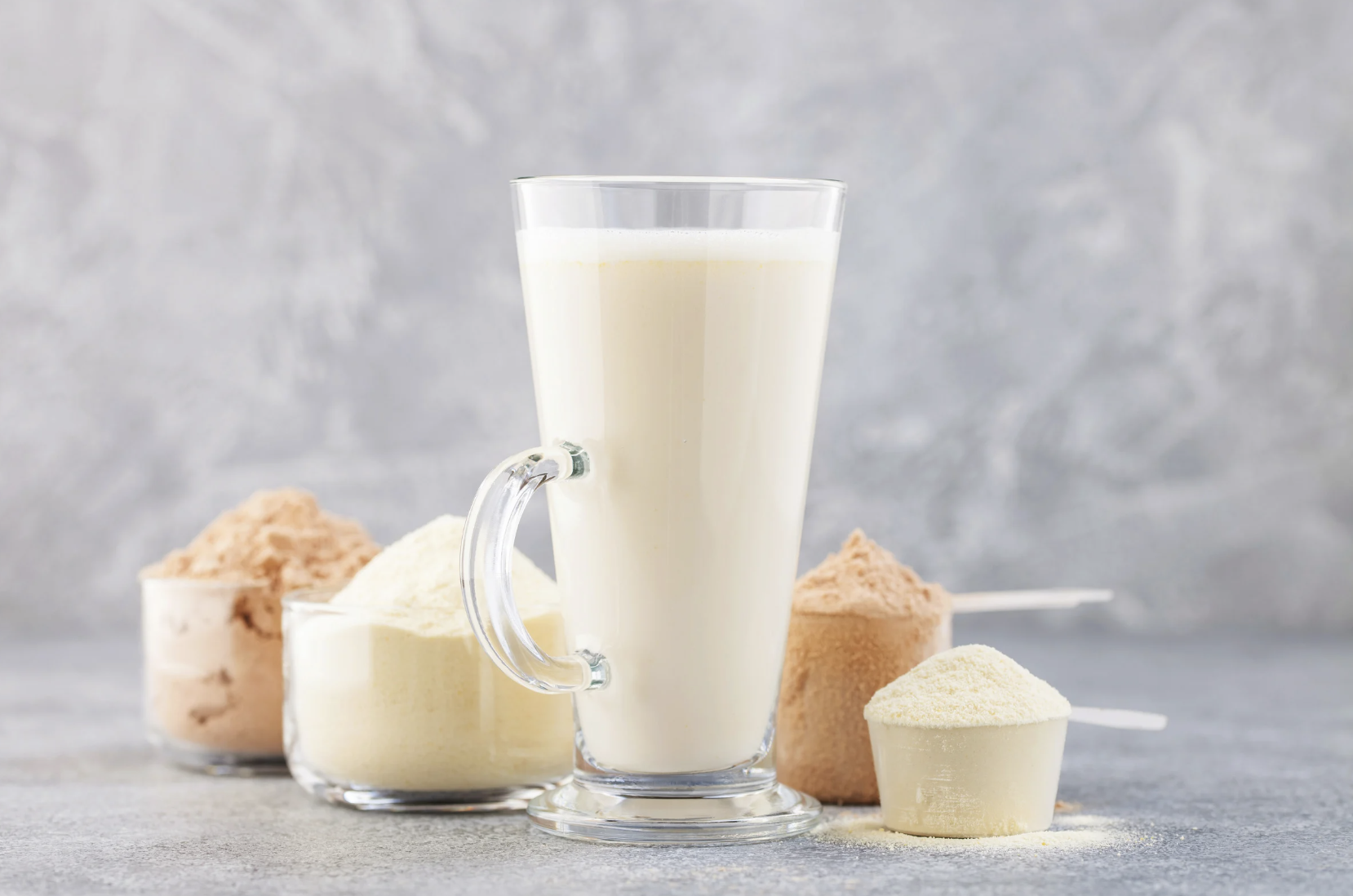
Having a protein shake is one of the easiest and fastest ways to get in some extra protein to your diet — plus it’s a great on-the-go option. Whether you’re drinking them to meet your daily protein goals, grow muscle, or lose weight, there’s no arguing with the benefits of a quick protein shake. But deciding on which milk to use can be a little tricky, especially since not all milks are created equal.
From dairy milk to plant-based options like almond or oat milk, which one is the best to mix with a heaping scoop of protein? Well, what’s best will largely depend on your health goals (and dietary requirements). So, let’s take a look at some important factors to consider when choosing a milk and the different options available. Then, you can make an informed decision on which milk belongs in your protein shake.
What to look for when choosing milk for your protein powder
Before going into the specifics of each milk, here are four general features to look out for when deciding on a milk. Since health goals can be vastly different, some of these may or may not be a priority for you, so focus on what aligns closest to you.
- Protein content: The protein content of your milk may be important if you’re wanting to maximise your protein intake. In this case, dairy milk or soy milk will offer the highest amount of protein.
- Calorie & fat content: If your goal is weight loss, then looking at the caloric and fat content is an important factor to consider. This is when low-fat dairy milk or unsweetened almond milk are good choices.
- Creamy texture: For some of us, our protein shake is best when it’s creamy. Whole milk or oat milk are both excellent choices for this kind of texture.
- Dietary needs: For those who are lactose intolerant, or follow a vegan diet, a milk that’s dairy-free is a top priority. Luckily, there’s plenty of plant-based alternatives out there.
Dairy milk options
When it comes to making a protein shake, cow’s milk is the most traditional option. It contains protein, as well as plenty of essential vitamins and minerals like calcium, vitamin D, and phosphorus. As you may already know, dairy milk is categorised by fat content. Whole milk (AKA full-fat milk), contains the highest amount of fat, followed by reduced-fat, low-fat, and finally, fat-free or skim milk.
According to Health line, whole milk contains around 150 calories per cup and 8 grams of protein. If you’re looking to increase the calories in your diet, then adding whole milk to your protein powder is a great choice. It will also give you the creamiest protein shake out of all the dairy milk options, since the fat content gives it a more indulgent texture.
If you’re trying to reduce calories or fat intake, then opting for low-fat milk (~100 calories per cup) or skim milk (~80 calories per cup) might be optimal for your protein shake. These contain around 8.5 grams of protein respectively, so if you’re wanting to grow muscle, these dairy milks are equally as effective as whole milk. Additionally, the amount of vitamins and minerals remain the same no matter which dairy milk you choose.
Ultimately, the two biggest differences when choosing which of these dairy milks to mix with protein powder will be the caloric content and desired texture.
Plant-based milk options
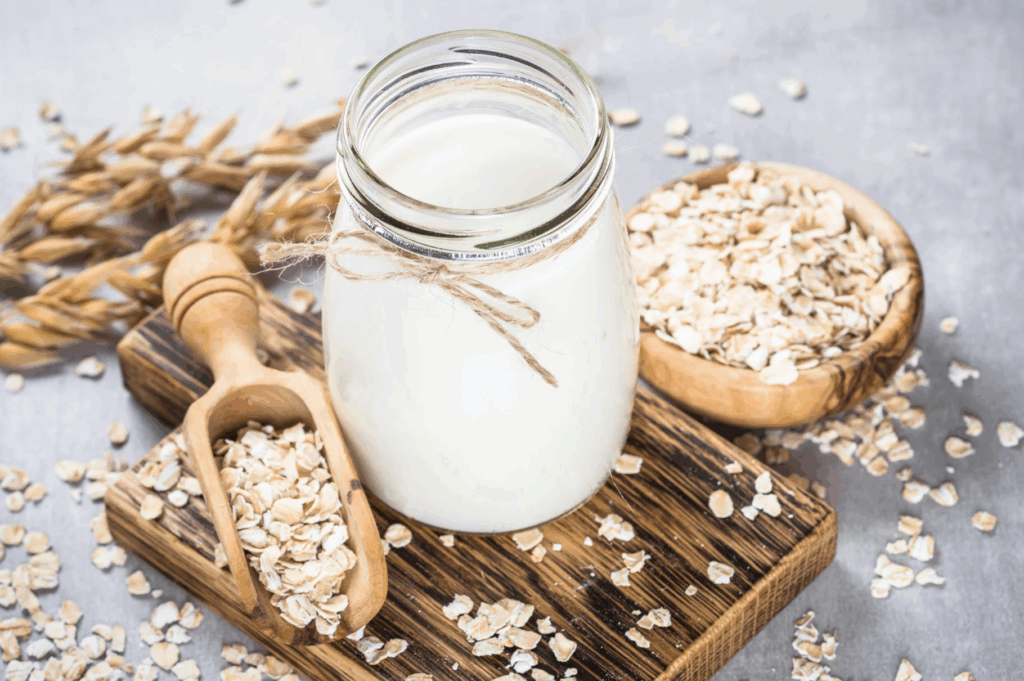
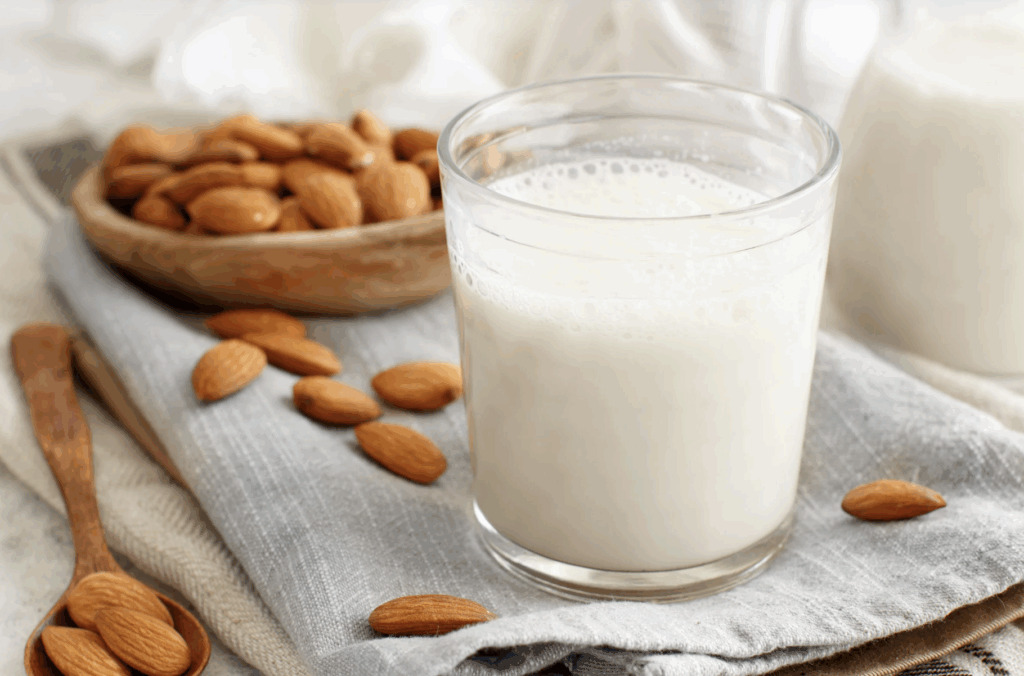
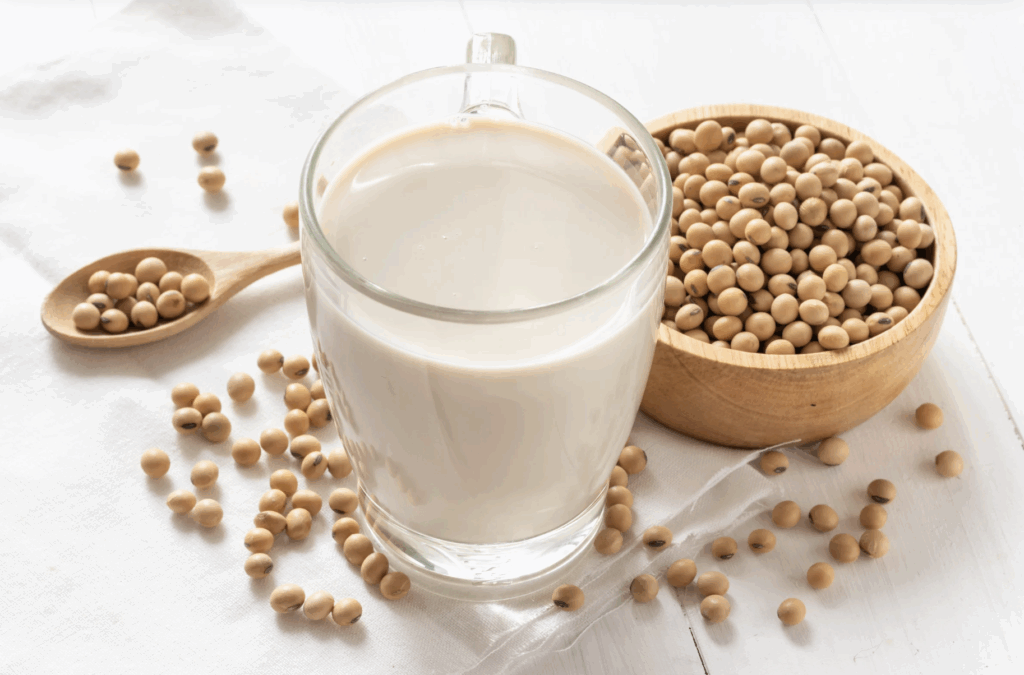
If you’re someone who follows a plant-based diet, or is dealing with lactose intolerance, there are plenty of plant-based milk options to mix with your protein powder. The most popular types of plant-based milks are soy, almond, and oat so let’s take a detailed look at each of these, since they differ texture and nutrition. It’s also important to note that the information below is based on the unsweetened versions of each milk.
Soy milk
Soy milk contains around 80 calories, 4 grams of fat, and 7 grams of protein per cup, which is nearly the same protein content as in dairy milk. Similarly to cow’s milk, it’s also a complete protein, containing all the essential amino acids. This is why soy milk is a great choice to mix with your protein shake, especially if you’re looking to boost your protein intake but don’t drink dairy milk.
Almond milk
Almond milk contains around 40 calories, 3 grams of fat, and 1 gram of protein per cup. So, while it has substantially less calories than soy and dairy milk, it also contains minimal amounts of protein. Almond milk is an ideal dairy milk alternative for someone whose goal is weight loss since it’s low-calorie. Just keep in mind that you’ll be relying mostly on the protein powder itself for the protein boost.
Oat milk
Oat milk contains around 120 calories, 5 grams of fat, and 3 grams of protein per cup. Oat milk is also substantially higher in carbs than almond or soy, which makes it a good choice for anyone who is highly active and wants to support muscle recovery. The natural creaminess of this milk is also great for anyone after a more indulgent protein shake. But if you’re aim is weight loss or you’re on a low-carb diet, oat milk might not be the best mixing choice.
A note on nutrients: Most plant-based milks are fortified with vitamins and minerals to mimic dairy milk, but this varies from brand to brand. If you want to ensure you’re milk is nutrient-rich, make sure to read the back of the label.
The ideal milk for your protein shake
Here is a quick table summarising what the best milk to mix with your protein powder is, based on what might be most important for you.
| GOAL | BEST MILK | WHY |
| muscle growth | any dairy milk or soy milk | high in protein |
| low-carb diet | almond milk | lowest amount of carbs |
| weight loss | low-fat dairy milk or almond milk | low calorie, low fat |
| creamy protein shake | whole milk or oat milk | thicker and creamier texture |
Tips for making the best protein shake
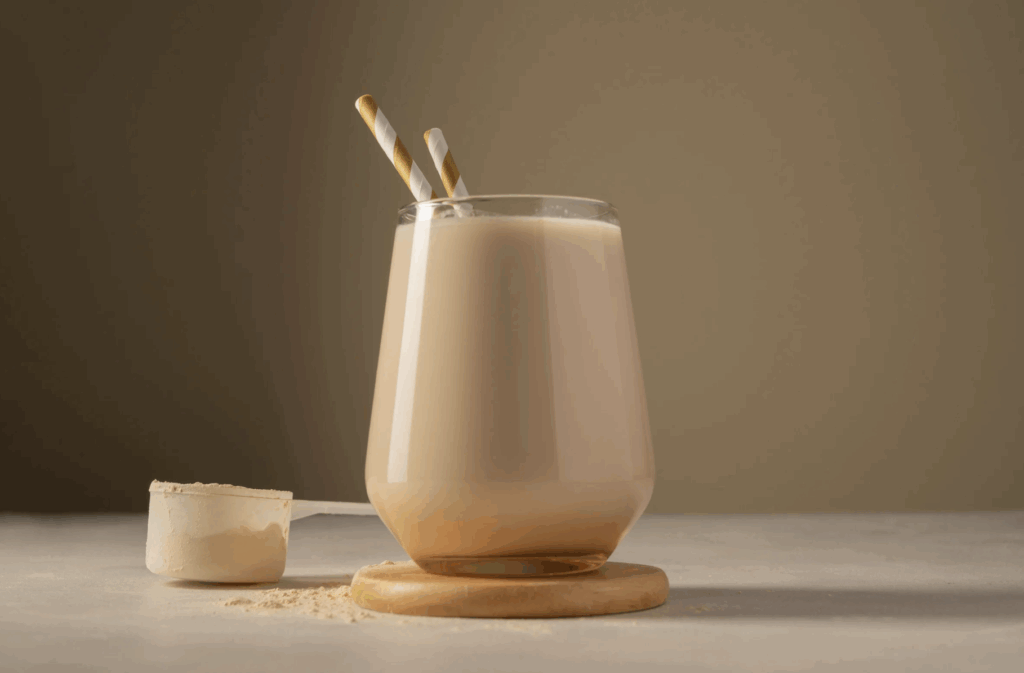
Whichever milk you choose to mix with your protein powder, here’s a few handy tips to make a lump-free, delicious protein shake.
- Always add your milk first, then the protein powder. This minimises any lumps from forming.
- Use a shaker bottle or blender for the smoothest results.
- Use around 1-1.5 cups of milk per scoop of protein powder, depending on your preferred consistency.
- For an even thicker shake, blend in some frozen fruit or yogurt.
Final thoughts
Ultimately, the best milk for your protein shake will vary depending on your needs. Dairy milk or soy milk are great for anybody wanting to build muscle, almond milk is ideal for people watching their calorie or carb intake, and whole milk or oat milk are perfect for those who prefer a creamier shake. At the end of the day, the ‘best’ milk is the one that allows you to enjoy your protein shake while aligning with your health goals.
Of course, the protein powder you choose matters as much as the milk you pick. For example, whey protein, an animal-based protein source, has different benefits to a plant-based protein like hemp protein. If you want to learn more, check out this post comparing hemp vs whey protein.
And if you’re looking to use your protein powder in more than just a protein shake, here are some great protein powder recipes to get you started:




Leave a Reply